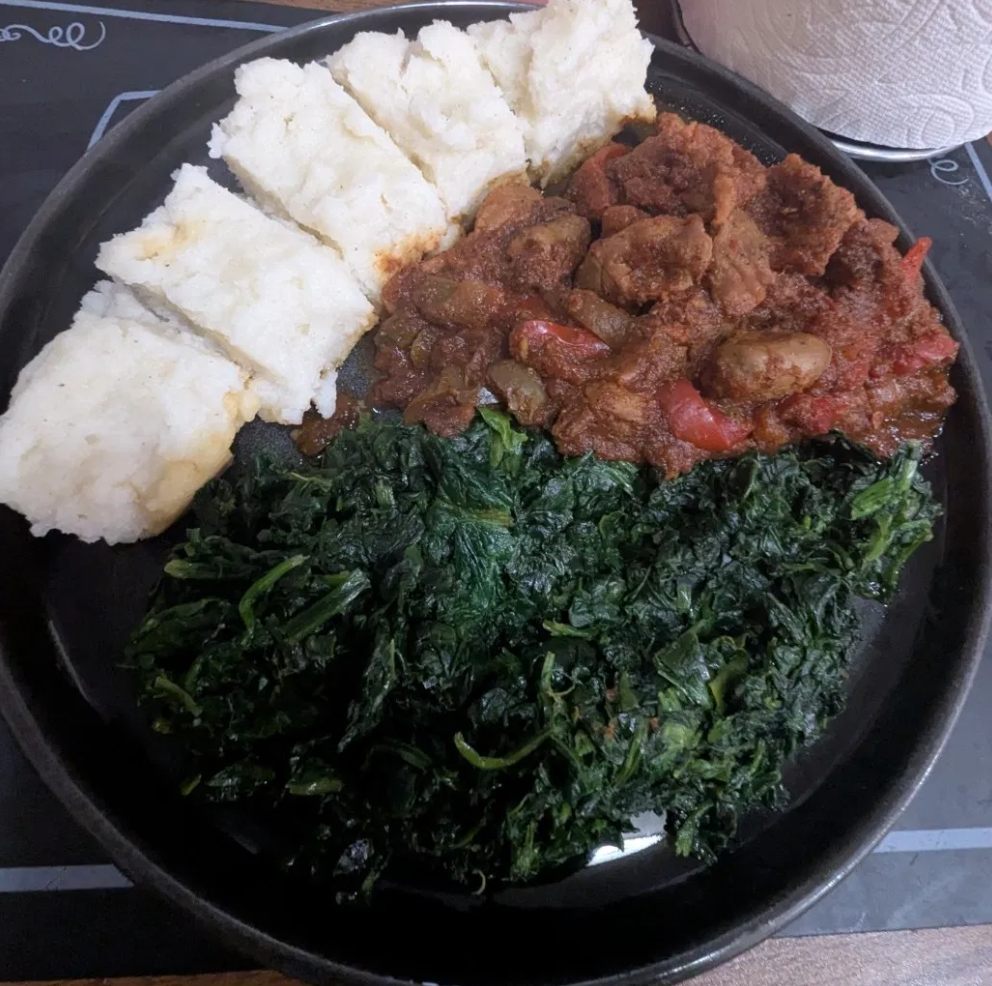
Ugali: A Kenyan Staple
Food Culture Essay
Come on a journey with me as we explore the story of the Kenyan staple we call Ugali. This is a food deeply rooted in Kenyan culture and served multiple times a week in most Kenyan homes. Let's dive into the story behind this traditional Kenyan favorite and find out why it has been affectionately stated that "Ugali is life!" Njoo Tule Rafiki Wangu. This may be hard to believe, but there was a time in Kenya when Ugali was not the staple food that it is today. Colonialism brought many things to Africa on those ships. One of those things was maize. Before that, local grains like millet and sorghum were deeply rooted in African farming traditions — drought resistant and indigenous to the lands. This shift to a new staple from the Americas was encouraged by the British, sometimes forcefully, and more and more farmers began to transition from indigenous crops to acres and acres of maize. It grew well in the climate and yielded far more produce than the local crops. It's actually a story of how forced dependency on a crop turned into something widely embraced and adopted as their own. We don't want to dwell on colonialism here — although it is part of the history, it's not the story. The story is of resilience and the building of something from nothing. Ugali is filling, readily available, and easy to make. It pairs well with stews, vegetables, and even fermented milk. You will find it everywhere you look, from small eateries to high-profile restaurants in Kenya. But the reach goes far beyond Kenya's borders — a form of maize porridge in various tastes and textures can be found in most countries across Africa. In Nigeria it's fufu, though often made with cassava. In Uganda it's posho. In South Africa it's called pap. In Mozambique it's called xima. All with a similar job: keep the people full, affordably.
How to Make Ugali
Ingredients
- Maize flour
- Water
Instructions
- Pour about 2 cups of water into a pot and bring it to a rolling boil.
- Add a small amount of flour and stir to make a thin porridge — this helps prevent lumps later.
- Reduce heat slightly. Add more flour bit by bit while stirring continuously.
- Keep mixing with a strong spoon. It will become thick and hard to stir — this is normal.
- Turn and press the ugali against the sides of the pot. Break any lumps and mix until smooth and firm.
- Cover and let it cook on low heat for 3–5 minutes, turning once or twice.
- Shape it in the pot or turn it onto a plate. Serve hot.
That's the way I learned, and it's always perfect.
Now that you know how to make it, let's talk about how to eat it. By itself, ugali is often described as tasteless — and that's the point. Think of it like rice or a tortilla: it's a vessel. Pinch off a chunk, press it into your stew, sukuma wiki, your favorite meat, or anything savory. No utensils required — just clean hands. That's how many Kenyans enjoy it almost daily, because ugali is not only a staple. As the saying goes: "Ugali is life." When made right, you become the family favorite. But be careful — in Kenyan culture, when you do something well, that becomes your duty. Congratulations. You are now the Family Ugali Chef. The new generation has done some experimenting, coming up with creations like Mango Ugali, Ugali Fries, and even Ugali Crust Pizza. Though not widely embraced, they show the creativity and innovation of this generation as they journey through their own culinary adventure. For the more traditional consumer — just cook it well and serve it beside a good stew. Ugali is for everyone, no matter how you enjoy it. My personal history with ugali is short. I first tried it in 2024. A friend taught me how to make it, and after all the hype I was excited — but like most people not raised with it, I didn't get it. I went six months before trying it again, and for whatever reason, it just clicked. I had started preparing more Kenyan dishes, and with that genre of food, ugali pairs perfectly. I went from "I don't understand this" to eating it three or more times a week. I even have a dedicated pot just for ugali. I can't wait for the day I'm in Kenya — choma smoke in the air, sukuma wiki on the stove, and of course, ugali.